Thursday, July 19, 2012

After Tupac and D Foster - Jacqueline Woodson

"That evening, the three of us - me, Neeka, and D - 
sat on my stairs, until we were too cold to shiver anymore. 
This numbness came over us, and we didn't even have to
talk or curse or cry. Me and Neeka and D knew what we felt - 
way deep past all the cold. Past the coming darkness." 

When I was searching for books to read that focused on more multicultural topics, this one popped up in my Google search. It was a Newbery Honor book. One of my favorite rappers was even listed in the title. It was available in Swem. So, I went for it and checked the book out of the library, and figured it would be a stark contrast to Because of Winn-Dixie, the required book for realistic fiction. Something about reading this book was so much more realistic to me than Because of Winn-Dixie was. Part of me wondered where that sense of realism came from and if my hometown had anything to do with that. I realized that I knew people like the characters in this book, knew the setting, knew the topic matter. That came from going through a public school system where approximately 75% of students were on free/reduced lunch, where the teen pregnancy rate per capita was one of the highest in the state of Virginia (see chart below), and where school friends of mine were locked up for possession or gang violence by age 17. 

In my high school, gang violence and teenage pregnancy and single-parents and hunger were all issues. REAL issues. 
After Tupac and D Foster gives the reader three distinct lead characters - the narrator, Neeka, and D. I didn't realize this until I went to write this blogpost, but the narrator is never given a name. She relays all of the information to us in the first person throughout the book, but we never hear her mother or Neeka or D refer to her by a name. This is a somewhat coming of age story and portrays the life occurrences of Neeka, the narrator, and D from the time that they are 11 to the time that they are 13. It tells various stories - stories of low SES, stories about homosexuality, stories about black culture, stories of hardship, and stories of overcoming struggle. Although family plays a large role in this book, it is not the family of the narrator - the families of Neeka and D are woven into every page. Neeka is almost more a part of Neeka's family than she is of her own, and she acknowledges this by spending as much time at Neeka's house as possible. We as readers see Neeka's family blossom and learn so much about them - the passion that Jayjones has for basketball, the inner fight that Tash has (even as a gay man in prison), the love that Miss Irene has for all of her children, and more. I was extremely interested to see that the storyline of Tash was developed as much as it was, a storyline that directly tackles violence against homosexuals. Rather than having the story be extremely sad, the author Jacqueline Woodson let Tash come out of jail stronger than ever before. Normally, it would seem that books that target hip-hop culture would not also tackle issues of violence and homosexuality, but this book does. 
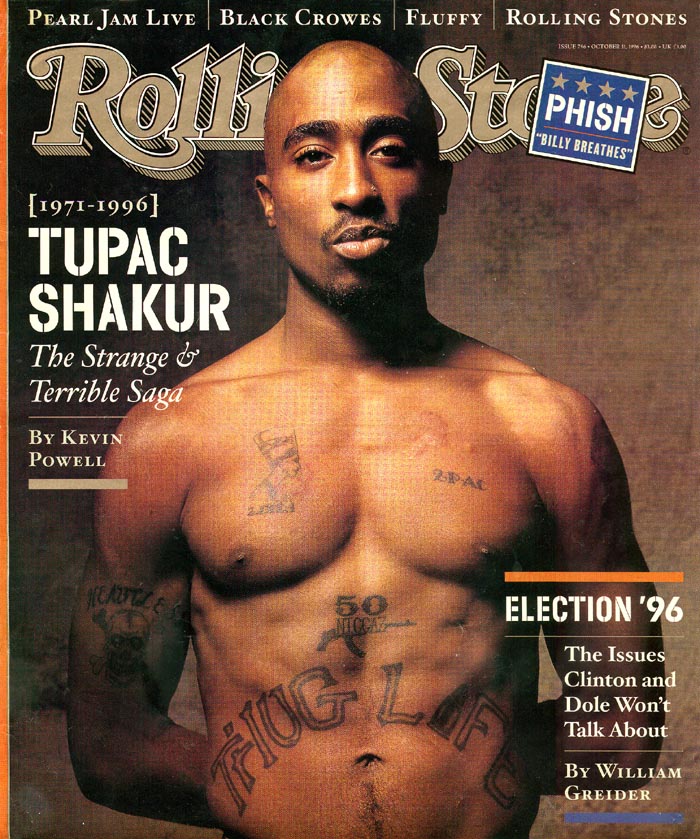
The friendship that the narrator, D Foster, and Neeka have with one another is reminiscent of many friendships at that age, but somehow seems stronger than most because it is cemented by their common struggle with poverty, family issues, and their love of everything Tupac. The way that Jacqueline Woodson has these girls converse about Tupac made me wonder if Tupac was the name of another character in the story that they were friends with and not the infamous late rap artist. They talk about Tupac with a love and familiarity that can only mean that they are true fans. They talk about Tupac's song "Dear Mama" and relate it to their mothers. They talk about Tupac's song "Brenda's Got a Baby" and analyze it just like college students analyzing a work of literature in a 300-level English class. The entire novel's dialogue is written in African American Vernacular English, and that makes it extremely authentic to me - all of the words said and thoughts had seemed truly real. Jacqueline Woodson provides the three main characters, I think, to give each reader one to relate to. I related to the narrator, but I know that other friends of mine would have identified more with Neeka or with D Foster or even with Jayjones or Tash. 
This book would not be appropriate for children in age classroom I'm planning on teaching to read, but would be a fantastic YA book for children in 6th/7th grade and older to read, as those are the types of students who would best be able to understand the experiences that occur and the mild bad language that is used. 

Tuesday, July 17, 2012

The Giver - Lois Lowry

"It didn't worry him. How could someone not fit in?"

The question of "How could someone not fit in?", asked by Jonas in Chapter Six of The Giver, to me, represents a vast majority of the book and how the theme of challenging homogeneity and sameness flows throughout the pages. In reading The Giver many times growing up, I never realized that it was considered as fantasy/science-fiction, and I think that that gives due credit to the author Lois Lowry and the depth of description she used in creating the world of Sameness. When I was watching an interview with Lois Lowry (available here), I was interested to learn that she never considered The Giver as science-fiction either, much more of realistic fiction and that she crafted it in the same way she crafts all of her books - she chooses a place, she writes the characters, and she puts them in situations. I also loved hearing Lois Lowry describe the path that she purposely took us as readers on throughout the book, stating that she made the first third of the book purposely seductive and wanted me as a reader to think, even just for a little while, that Sameness was an okay place to live. And I fell victim to that. And then, just as every time that I read this book, I am heartbroken with Jonas as he learns the reality of Sameness. And again, I am overwhelmed with warmth and  anxiety as he and Gabriel approach the twinkling lights and ride down the hill in the sled. 

When I was thumbing through chapters after I was done reading, I was surprised to see that Lois Lowry leaves us with a very short statement at the end of every chapter, whether it is dialogue between Lily and her father or a description of how Jonas is feeling. I drew a connection between this and the writing style of Cynthia Rylant, who we saw do this in multiple picturebooks throughout her career. But just as I love Cynthia Rylant, I love Lois Lowry. For a single author to contain to of my most beloved childhood novels (The Giver and Number the Stars) is impressive. And even more admirable is that both of these books made me think critically about the wrongdoings going on in the world, embrace my imagination, and created vivid worlds in my head (in both Sameness and Copenhagen with Annemarie and Ellen). I definitely believe that both of these novels and the issues that Lois Lowry raises in her books shaped me to be the person I am today - someone who questions to herself a lot and someone who cares very strongly about the wellbeing of people all across the world. Interestingly enough, these books were both class reads during my "gifted" classes and I wish I could go back and investigate if my peers who were not in gifted instruction were able to experience these books with the same curiosity and interest that I did. 

Although I love this book with all of my heart, I have always wished that The Giver had been more a part of Jonas's final journey. I'm sure that Lois Lowry purposefully chose to have him suddenly disappear than waste pages describing the goodbye between Jonas and The Giver. However, every time I read this book, I find myself turning pages trying to make sure I didn't miss the final scene between Jonas and The Giver. But time and time again, that is my only critique. I do recognize that I have a hard time in being objective in critiquing this book because of my strong personal connection to it and the association that both the book and Lois Lowry have with my childhood. 

When looking at buying books for this class, there was no question in my mind of whether I wanted to purchase The Giver or not for my classroom library. After talking extensively about censorship and its issues as well as reading up on a case of banning The Giver, I feel adequately prepared to talk to my students about any issues they see with the book and break them down for them. Now, I simply have to purchase Number The Stars...

The Stinky Cheese and Other Fairly Stupid Tales - Jon Scieszka and Lane Smith

"A long time ago, 
people used to tell magical stories 
of wonder and enchantment. 
Those stories were called Fairy Tales. 
Those stories are not in this book. 
The stories in this book are almost Fairy Tales. 
But not quite."

I remember reading this book as a third grader and thinking that it was quite possibly one of the strangest things that I had ever read. And even, at age 22, I'm still thinking it is quite possibly one of the strangest books I have ever read. However, I have a new-found appreciation for this book and all of its idiosyncrasies. 
This book takes classically-known fairy tales and puts spins on each one, and renames them as they go. The Table of Contents (after it squashed everybody) introduces the breakdown of all of the stories and their "re-namings." The stories that are included in the fractured fairytale collection are: Chicken Licken, The Princess and the Bowling Ball, The Really Ugly Duckling, The Other Frog Prince, Little Red Running Shorts, Jack's Bean Problem, Cinderumpelstiltskin, The Tortoise and the Hair, The Stinky Cheese Man, and The Boy Who Cried "Cow Patty." Interestingly enough, after finishing the book, I realized that there was no specific story for The Boy Who Cried "Cow Patty" and even tried counting back to page 52 to see if there was a story, but page 52 simply lands on a picture of a cow in the middle of the story about the Stinky Cheese Man, which I thought was interesting, but also couldn't figure it out. 
Jon Scieszka and Lane Smith make this book a strange and slightly dark one with their illustrations that are absolutely bizarre. My favorite illustration has to be the one in the story of The Really Ugly Duckling, where six "normal-looking" ducks surround a crazy-eyed duck with red speckles on his belly and his tongue hanging out of his mouth and mismatched crazy eyes. It really, to me, sums up the craziness that takes place in these pages and how ridiculous of stories Scieszka and Smith created. This then makes me upset that Dr. Johnson told our class about how the two of them were in the midst of a giant feud and weren't working together anymore. What a sad occurrence for the writing of fractured fairytales. 


This book is one of the first ones that I have observed the text and illustrations playing equal roles in creating and fleshing out the story. Without the strangeness and silly language, the pictures lack meaning. However, without the crazy and almost Tim Burton-like illustrations throughout the book, the text would not jump off the page as it seems to do when next to the illustrations. 


As for my opinion on the book, I admire the type of story that Sciezska and Smith set out to write and think that they are staples in any classroom library to show children the sort of differences between fairytales and fractured fairytales as well as encouraging children to embrace their imagination. However, when it comes to personal preferences for fairytale (or fractured tale) collections that I enjoy reading, this was not necessarily my cup of tea and never has been. Even though I genuinely thought certain stories (like The Really Ugly Duckling) were fantastic, as an entire collection, I wasn't the biggest fan. I do, however, particularly because of this class, recognize this book's place in literature. I also realize that my classroom library cannot simply be constructed of books that I adore because although that would include books, it would be limiting my children to books that only I like and not exposing them to a wide-enough array of literature. However, I think those thoughts have gotten stronger and stronger since studying censorship - just me drawing connections between concepts! 

Sunday, July 15, 2012

Ruby Lu, Brave and True - Lenore Look

"And for the first time, Ruby felt that everything was going to be okay. 
And everything was."
In selecting a realistic fiction book to read, I stumbled upon Ruby Lu, Brave and True in Swem Library, picked it up, and didn't look at it again until last week, when I started reading it every night before bed. I couldn't believe that I had never heard of it before I picked it up to read (and now, of course, after reading the chapter in the book - I see it's mentioned!) because it is absolutely fantastic. Not only does it have the potential to introduce children to Chinese culture, but it truly gives you a sneak peek into the life of another girl, living in another city, with another family. And even though Ruby Lu is Chinese and goes to Chinese school and visits her grandparents in Chinatown, she has many similarities to other children in the world. She gets frustrated when her little brother steals the show and attention from her magic tricks, she gets annoyed when the bully calls her dad a "knitting machine," and she has trouble in sharing her room with her cousin Flying Duck. Okay, so maybe most children won't steal their parents car at age 8 to drive to Chinese school and make it there safely, but it was a part of the story that added to how spunky and charismatic Ruby's character is. 

Ruby Lu, Brave and True goes into detail about the average and daily life of Ruby, and introduces us as the reader to a variety of characters, including her little brother, Oscar, who we learn to both love and hate, her best friend at Chinese school (also named Ruby), her poh-poh and gung gung (Grandfather on her mother's side, Grandmother on her mother's side), and many more. One of my favorite aspects of this book was the inclusion of Chinese words along with a glossary in the back of the book. Throughout Ruby Lu, Look includes italicized words, and then, in order to determine what those italicized Chinese words mean, the reader has to look in the glossary in the back. Many of them are able to be determined by context clues, but the fact that there is a "Ruby's Fantastic Glossary and Pronunciation Guide" with 28 words in the back is impressive. Not all of the words are Chinese, however, they are all somehow related to Chinese culture. 
Although Ruby initially struggles in Chinese school, she eventually realizes that sometimes, learning is hard, and that she has to push through it (thanks to a little advice and help from her mom). We see a lot of transformations in Ruby throughout the book, particularly in her emotions toward different people. Ruby struggles in loving Oscar because he is ruining her magic show and stealing the spotlight (and learning Chinese much faster than her), but she doesn't let that get her down. She realizes that Oscar can help her with her magic show, and tries to learn Chinese with the same dedication as him. She turns a negative into a positive. We see this same behavior in her interactions with the bully Christina and with her cousin Flying Duck, which I loved. 
I thought about ways that this book could be discussed, particularly the sections with the bully Christina, because bullying is such an issue in schools these days. I looked for discussion questions for classrooms and found these and was pleasantly surprised by the simplicity of the question suggested: 
Did Christina deserve to be sick? Did being sick change her?
I thought that a question as simple as this one, but also as targeted to the situation could help bring up a broader discussion on bullying in the classroom. As hard as it is to tell children, bullying isn't okay - whether you're the bully or you're being mean back to the bully. We need to strive for good behavior and not threaten each other. I also loved the idea of making a rhyming slogan for each child in your class's name, like Ruby Lu, Brave and True and Flying Duck, Never out of Luck
Overall, I loved this book, and it will definitely be in my classroom library - I think that it introduces children properly and appropriately to another culture (without a lot of stereotyping), provides a relatable character for children, and has a fun storyline that will please adults and children alike. This book is a staple

Thursday, July 12, 2012

Because of Winn-Dixie - Kate DiCamillo

Having Because of Winn-Dixie by Kate DiCamillo as an introduction to realistic fiction was a perfect transition from picturebooks to chapter books. Because of Winn-Dixie is an easy read (for a 22-year-old!) and created a fictional world that I wanted to live in. This fictional world of Naomi, Florida was so descriptively and picturesquely set up that I was able to have a completely functional picture of the town, the characters, and all of their idiosyncrasies in my head. I was able to see the bright colors of Gloria Dump's eclectic jungle of a backyard, hear Otis's music in the petshop playing in my head, and imagine the shaky Southern and gentle voice of Miss Franny Block reading and telling stories in her library.
Because of the transfer from picturebooks to chapter books, there is no longer a substantial amount of illustrations to evaluate or to provide the world of the book for us on every page. We now have to rely on the language of the author to provide those illustrations for us in our mind. Kate DiCamillo does this, particularly with the dialogue that she establishes between the characters and the use of Southern Vernacular English she employs, specifically in conversations that involve Miss Franny Block, Gloria Dump and even Sweetie Pie Thomas.
Often, when there are movie adaptations of books, I search in trailers and films to see if the mental images of characters that I form in my head are matched in their representations on screen. When I looked to find the trailer of Because of Winn-Dixie (here), I was met with exact representations of Winn-Dixie, India Opal, Preacher, the Dewberry boys, and Gloria Dump. Miss Franny Block was slightly different, and although Otis was not what I expected him to be, his spirit and calmness matched up exactly in the trailer. However, that could just be my love of everything Dave Matthews and me struggling to accept the fact that he was in this movie.
I was expecting the book to end up with some sort of sadness - with Opal not being able to find Winn-Dixie but realizing all of the good that he gave her while she had him. However, like a typical book that plays into our love for happy endings, Winn-Dixie was retrieved and everyone lived happily ever after, even though this wasn't a fairytale story. I think that this story could easily be a class read at any grade level in elementary school, particularly with the short chapter length. It definitely has potential to be a book that students are waiting for anxiously every day when they walk into class, and that is always what we want from them, right?

Tuesday, July 10, 2012

Mufaro's Beautiful Daughters - John Steptoe

I remember sitting in elementary school and hearing a teacher (I don't remember who) read my class Mufaro's Beautiful Daughters by John Steptoe. I remember feeling a connection with each sister - with Nyasha who was sweet and loved to serve others, but also with Manyara who was slightly selfish and wanted to put herself first. I remember being entraced by the transition of Nyoka from garden snake into a king. I loved this book so much that during my senior year, when each student in my Advanced English class had to choose a book to read to the class to depict the oral tradition from which it came, I chose Mufaro's Beautiful Daughters. I brought in props, I wore my skirt and headwrap that my sister got me in Zambia, and did my best to read the story with the same sense of expression that I had in my head for each character. 
As I read it again for this class, I still found myself enamored with it, even over 15 years after the first time that I read it. The language that John Steptoe uses is lyrical and traditional of a fairytale, but somehow still harkens back to the rural setting of the story in a small village in Africa. Throughout the book, we as the reader are led to side with Nyasha and her good heart, just as throughout the typical Cinderella story, we are led to side with Cinderella and her good heart rather than her two evil stepsisters and her evil stepmother. There is an underlying part of us that hopes that Nyasha's good behavior will be rewarded by the King, and in the end, it is. 
The lifelike almost portrait-style illustrations of Steptoe allow readers make a more personal connection to each of the characters, even characters not mentioned more than once or twice like the little boy in the forest and the king's mother (as seen in the picture above). There is realism and tenderness seen here in this image between a woman previously unknown to Nyasha. 


After doing research about John Steptoe as an author, I discovered that he died extremely prematurely at the age of 39, only one year after finishing writing and illustrating Mufaro's Beautiful Daughters. He won both Caldecott Honors and Coretta Scott King Honors for various books that he has illustrated and written, and it is a travesty that someone who accomplished as much as he did during his short life span couldn't have stayed around just a little longer. 

Moss Gown - William H. Hooks

When deciding upon the two additional Cinderella tales that I had to read for CRIN R21, I wanted to choose one that I was more familiar with (Mufaro's Beautiful Daughters - my next blog post!) and one that I was less familiar with. I sat in Swem in the Juvenile Section with Cinderella books spread out around me and settled on Moss Gown, written by William H. Hooks and illustrated by Donald Carrick. I chose it not only because I was less familiar with it, but also because it takes place in Eastern North Carolina, a part of the state that I'm extremely familiar with, as I live five minutes from the Southeastern Virginia/Northeastern North Carolina border. 
In reading the "Author's Note" located at the back of the book, William Hooks acknowledges that he wrote Moss Gown as a combination of many Cinderella-like tales that he heard growing up as a child. He also admits that there are traces of King Lear in it, but that this was not his doing - the Elizabethan history of North Carolina and the rurality of the area blended into one, single, story that he chose to document. 


One of the more interesting aspects of the book is its inclusion of spell-casting, a sort of "witch doctor woman," and the use of the term "gris-gris," which was historically used in the Carolinas to identify this particular kind of spell-casting. The phrase "gris-gris" (pronounced "gree-gree") is Candace/Moss Gown's form of Dorothy's red slippers. Whenever she says "gris-gris, gris-gris, grine!" the moss gown that makes her so beautiful appears before her in the hands of the gris-gris woman and she is given instructions to realize that the gown will turn back to rags when the Morning Star no longer shines. The gris-gris woman almost seems to be an homage to an old Creole Vodou woman, particularly in the picture on page 26 of the book (seen to the left). From the time that I've spent in Haiti and the conversations that I had with a Haitian Vodou priest, much of this picture represents very stereotypical views of vodou, the intensity of the eyes, the phantasmagoric imagery present, and the magic that seems to drip off of the page with every glance.  


Moss Gown and the illustrations present in it deal interestingly with race,  as the gris-gris woman is referred to as simply "black." Other than the gris-gris woman, there are no other major depictions of African-American characters in the book, apart from the servant people pictured in the start of Section III of the book. I found this interesting, albeit historically accurate, as we as readers are given the perception that Moss Gown takes place in the 1800's in rural North Carolina. The only identification of time that we are given is the first sentence, "Long ago in the old South there was a man who owned a great plantation." This presents an interesting dilemma for teachers in including this book in their libraries. I would have this book present in my library, and even read it aloud to my students, explaining the historical time period in which it takes place and talking about plantation systems if I wanted to tie it into other units. 


I don't know if Moss Gown is my favorite Cinderella adaptation that I've read, but I definitely think that it provided a new and different face to an old and traditional story.